

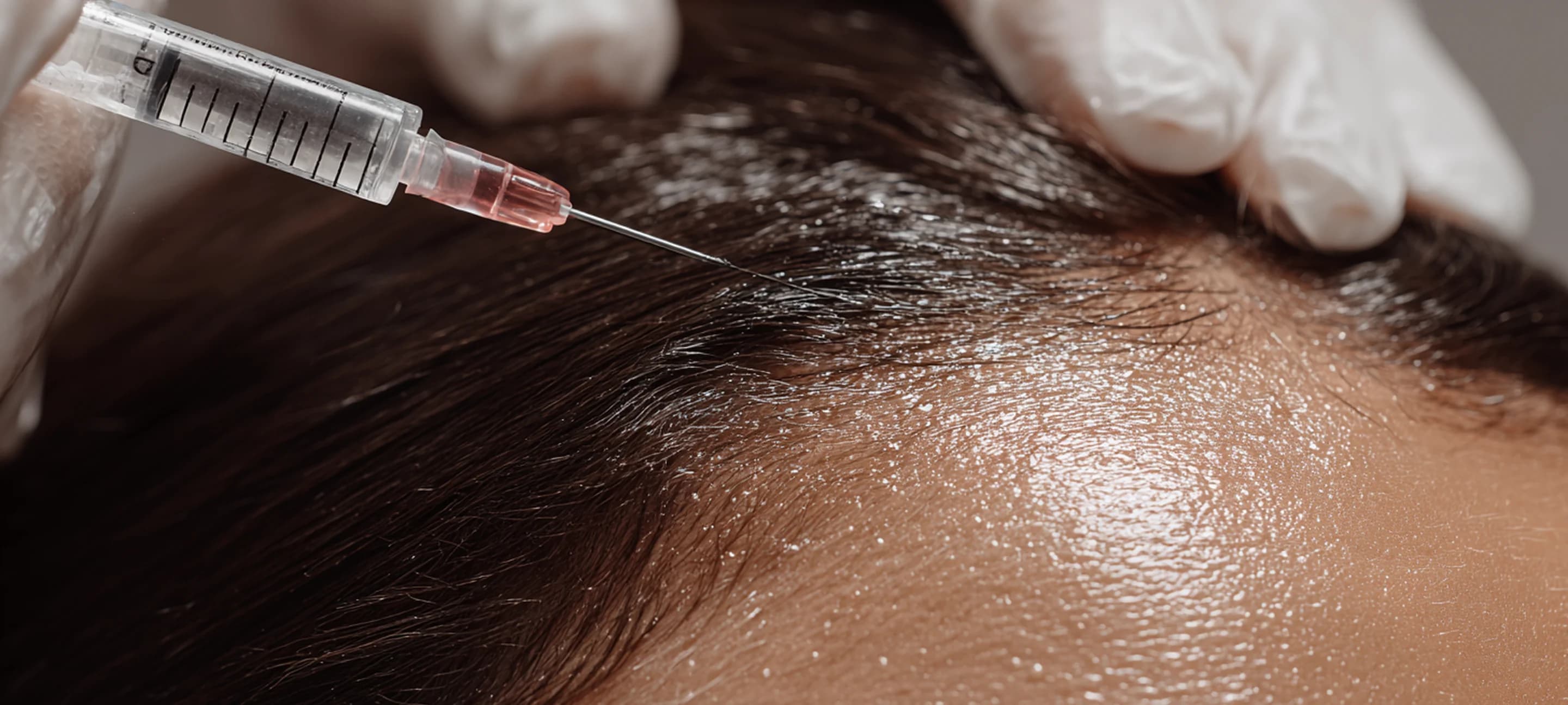
WHAT ARE HAIR LOSS TREATMENTS?
Hair loss treatments encompass a range of non-surgical options designed to slow thinning, stimulate regrowth, and improve scalp health. These may include PRP therapy, mesotherapy, microneedling, low-level laser therapy, exosomes, or polynucleotides. A qualified practitioner will assess your needs and recommend a personalised treatment plan.
THEY CAN BE USED TO:
- Slow or stop hair thinning
- Stimulate dormant hair follicles
- Improve hair density and thickness
- Strengthen existing hair
- Enhance scalp circulation and health
- Support regrowth in early-stage hair loss
What to Expect
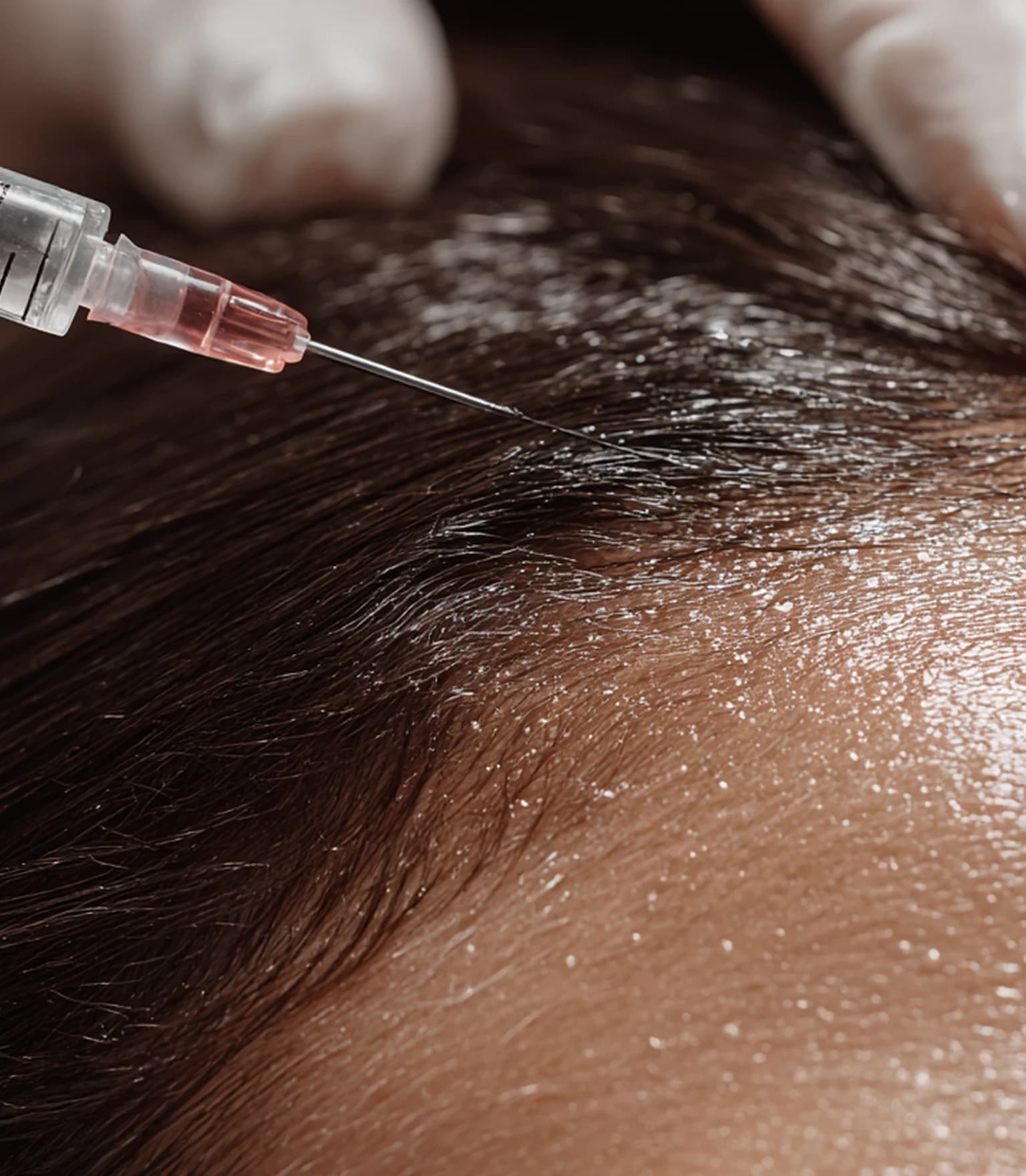
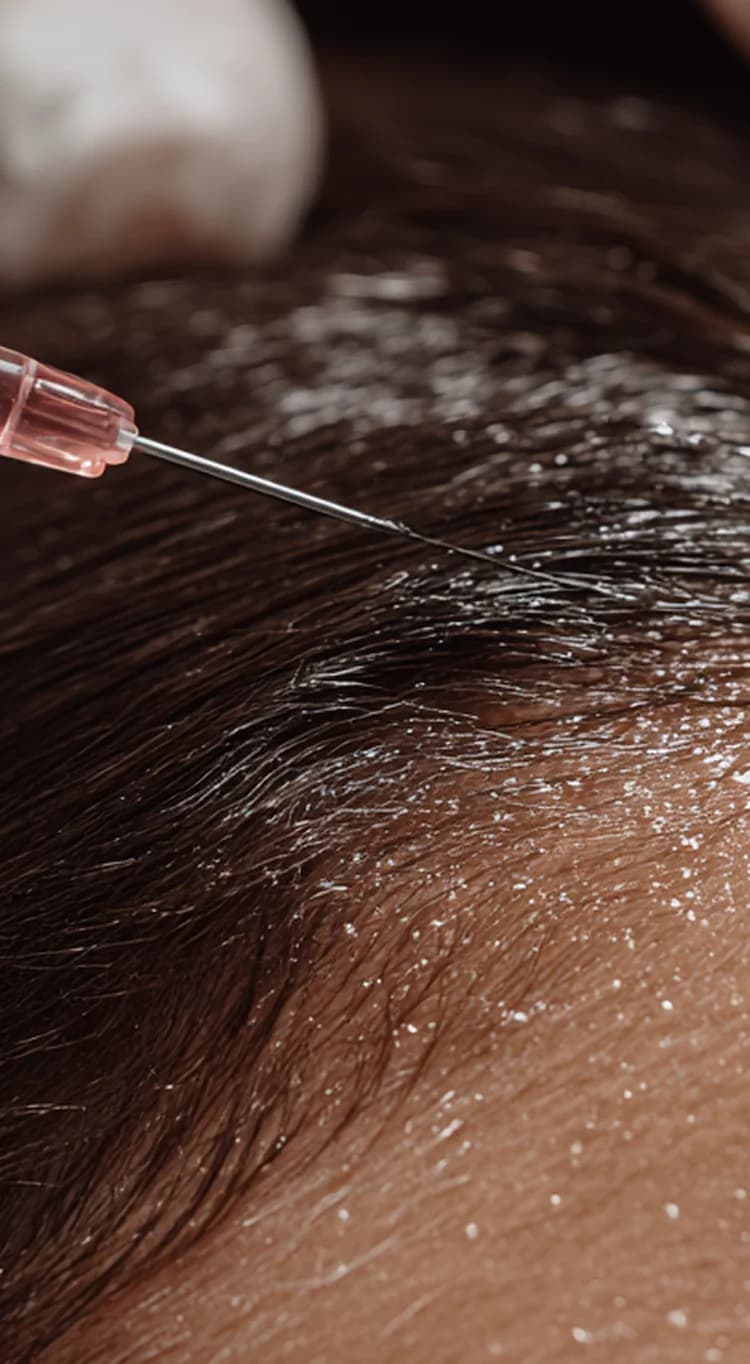
Depending on the chosen treatment, techniques may involve injecting growth factors into the scalp (PRP or mesotherapy), using microneedling to stimulate collagen and absorption, or applying laser or light therapy to energise follicles. Each method encourages cellular repair, increases blood flow, and awakens hair follicles for improved growth.
Treatment time
30–90 minutes depending on treatment typePain level
mild to moderate — numbing cream or local anaesthetic appliedDowntime
minimal; mild redness or tenderness for a few hoursWhen results appear
8–12 weeksFull results
4–6 monthsLongevity
12–24 months with regular maintenanceLook and feel
thicker fuller hair with improved density and reduced hair lossIS IT RIGHT FOR ME?
THIS TREATMENT MAY BE SUITABLE IF:
- You're experiencing thinning hair or early-stage hair loss
- You want a non-surgical approach to hair restoration
- You're looking to improve overall scalp health
- You're willing to commit to a series of treatments for best results
Pre-Care & Aftercare
BEFORE YOUR APPOINTMENT
- Wash your hair thoroughly before your appointment
- Avoid blood-thinning medications like aspirin for 48 hours
- Arrive with a clean dry scalp free of styling products
- Discuss your medical history and any underlying causes of hair loss with your practitioner
AFTER YOUR APPOINTMENT
- Avoid washing your hair for 24 hours if treatment involved injections
- Skip styling products heat tools or harsh chemicals for 24–48 hours
- Avoid strenuous exercise or sweating for 24 hours
- Protect your scalp from direct sun exposure
- A series of treatments (typically 3–6) spaced 4–6 weeks apart is usually recommended
top clinics to get Hair Growth Injections in your area






Not sure if Hair Growth Injections are right for you?
Answer a few quick questions to discover treatments tailored to your goals.
FAQs
Yes, there are several types of injections that can promote hair growth, with platelet-rich plasma (PRP) therapy being the most established and widely used, along with emerging treatments like exosomes and growth factor injections. The effectiveness depends on the type of hair loss being treated and the specific injection used. PRP injections for hair growth involve drawing your blood, concentrating the platelets containing growth factors, and injecting the platelet-rich plasma into the scalp to stimulate dormant hair follicles, improve blood supply and promote hair growth. This is the most common and evidence-based injection treatment for androgenetic alopecia (pattern hair loss). Corticosteroid injections treat alopecia areata specifically, using triamcinolone injected directly into bald patches to suppress the immune system attacking hair follicles, being very effective for this autoimmune condition but not treating pattern hair loss. Emerging injection treatments include exosome therapy using nano-sized vesicles containing growth factors; growth factor injections with concentrated growth factors; peptide injections stimulating follicles; and these being newer with less established evidence than PRP. What different injections treat shows PRP being effective for androgenetic alopecia (pattern hair loss); corticosteroid injections treating alopecia areata only; exosomes and growth factors being experimental for various hair loss types; and proper diagnosis determining appropriate treatment. Injections that don't work for hair growth include biotin injections not being standard treatment despite internet claims; B12 injections only helping if you have B12 deficiency; other vitamin injections not specifically promoting hair growth; and many marketed treatments lacking scientific evidence. The treatment protocol for PRP hair loss involves initial series of 3 to 4 treatments spaced 4 to 6 weeks apart; maintenance every 4 to 6 months; treatment taking 45 to 90 minutes per session; and results developing over 3 to 6 months. Expected results from hair growth injections show PRP producing increased hair density in 60% to 80% of appropriate candidates; reduced hair shedding; improved hair thickness; new growth in some cases; and maintenance being required. Who benefits from hair growth injections includes people with androgenetic alopecia (pattern hair loss); those with early to moderate hair loss; people with viable hair follicles; and candidates seeking non-surgical options. What injections cannot do includes not working for completely bald areas with no follicles; not preventing genetic hair loss permanently; not providing dramatic overnight results; requiring ongoing treatment; and being part of comprehensive hair loss management. For effective hair growth injection treatment, book a consultation on MARBL with a qualified practitioner who can properly diagnose your hair loss type, determine if injection therapy is appropriate, and create a personalized treatment plan.
Hair growth injections work for appropriate candidates when the right type of injection is used for the specific hair loss condition, with PRP therapy having the strongest evidence for treating androgenetic alopecia, showing meaningful improvements in hair density and thickness in clinical studies, though results vary significantly between individuals. PRP injections effectiveness shows clinical trials demonstrating increased hair count; improvements in hair diameter; patient satisfaction in many cases; 60% to 80% of people experiencing some improvement; and being more effective for early to moderate hair loss than advanced cases. Evidence supporting PRP for hair loss includes peer-reviewed studies showing positive results; before and after photos documenting improvement; objective measurements confirming increased density; FDA clearance for the procedure; and growing acceptance in hair loss treatment. Corticosteroid injections for alopecia areata show very high effectiveness for this specific condition; regrowth occurring in 60% to 90% of treated patches; being the standard treatment for alopecia areata; working through immune suppression; and not being effective for pattern hair loss. Why effectiveness varies includes individual biological response differing significantly; quality of PRP preparation affecting results; technique and injection depth mattering; the extent and duration of hair loss influencing outcomes; and realistic expectations being essential. What influences results from hair injections shows age affecting follicle responsiveness; earlier treatment providing better outcomes; miniaturized but viable follicles responding best; completely bald areas not responding; and consistency with treatment protocol being important. Realistic expectations about hair injection effectiveness include understanding improvement not being dramatic transformation; increased density being typical outcome rather than full regrowth; treatment taking 6 to 12 months to assess; maintenance being required to sustain benefits; and not working equally for everyone. What hair injections cannot do includes not regrowing hair in completely bald areas; not preventing genetic hair loss permanently; not providing instant results; not working for everyone; and requiring realistic expectations about outcomes. Factors predicting success with hair injections include having androgenetic alopecia or alopecia areata; early to moderate hair loss; miniaturized follicles that are still viable; realistic expectations; and commitment to treatment series and maintenance. When injections don't work relates to advanced hair loss with dead follicles; scarring alopecia; other medical causes of hair loss; poor PRP quality or technique; and individual non-response. Comparing injections to other hair treatments shows them being more effective than topical treatments alone; comparable to some oral medications; less permanent than hair transplant; and often being combined with other treatments. Most hair loss specialists view PRP and appropriate injection therapies as valuable tools for suitable candidates with the right type of hair loss and realistic expectations, though they are not miracle cures and work best as part of comprehensive hair loss management strategy.
Biotin injections are not a standard or proven treatment for hair growth and are generally not recommended by dermatologists or hair loss specialists, as biotin deficiency is very rare and supplementation only helps hair growth if you have an actual biotin deficiency, which most people do not. Understanding biotin's role in hair shows biotin (vitamin B7) being essential for keratin production; deficiency causing hair loss and skin issues; but deficiency being extremely rare in developed countries; most people getting adequate biotin from diet; and supplementation not helping if levels are already normal. Why biotin injections aren't standard treatment relates to oral biotin supplementation being effective if deficiency exists; injections not providing additional benefit over oral; deficiency being rare in healthy people; no evidence supporting injections for normal biotin levels; and hair loss usually having other causes. The biotin deficiency reality shows it being very uncommon; occurring mainly in severe malnutrition, genetic disorders or long-term antibiotic use; symptoms including hair loss, brittle nails and skin rash; and being easily diagnosed with blood test. What biotin can actually do for hair includes supporting normal hair growth if you are deficient; improving hair quality in deficiency cases; being safe to supplement; but not treating androgenetic alopecia or most hair loss; and not being magic solution for hair growth. The popularity of biotin for hair relates to supplement marketing claims; anecdotal reports being unreliable; placebo effect being strong; many people taking biotin without testing for deficiency; and confusion about its role. What research shows about biotin and hair includes very limited evidence for supplementation in non-deficient people; most studies being poor quality or marketing-funded; dermatologists being skeptical about benefits; and better treatments existing for hair loss. Biotin supplementation considerations show oral being just as effective as injection if deficiency exists; high doses (5mg to 10mg) being commonly used; being generally safe; possibly interfering with lab tests; and medical testing being advisable before supplementing. Real hair loss treatments with evidence include minoxidil (topical or oral); finasteride for men; PRP therapy; hair transplant; low-level laser therapy; and these having actual clinical evidence. When biotin might actually help shows rare cases of true deficiency; certain medical conditions; long-term antibiotic use; and confirmed low biotin levels on testing. The bottom line on biotin injections demonstrates them not being standard medical treatment; lacking evidence for hair growth in non-deficient people; oral supplementation being equally effective if needed; most hair loss having other causes; and consultation with dermatologist being appropriate. For effective hair loss treatment, book a consultation on MARBL with a qualified hair loss specialist who can properly diagnose the cause of your hair loss and recommend evidence-based treatments like PRP therapy or medical treatments that actually work, rather than unproven approaches like biotin injections.
B12 injections can help hair growth only if you have a B12 deficiency causing hair loss, but they do not treat androgenetic alopecia (pattern hair loss) or promote hair growth in people with normal B12 levels. B12 deficiency can cause hair loss, but it is just one of many possible causes that must be properly diagnosed. Understanding B12 and hair health shows vitamin B12 being essential for red blood cell formation; supporting cell division including hair follicle cells; deficiency causing anemia affecting hair growth; low B12 potentially contributing to hair loss; but deficiency being only one of many hair loss causes. B12 deficiency symptoms include fatigue and weakness; pale skin; shortness of breath; tingling in hands and feet; poor memory; and hair loss being one possible symptom; with blood test being required for diagnosis. Who might have B12 deficiency shows vegetarians and vegans being at higher risk; people with pernicious anemia; those with digestive disorders; older adults having reduced absorption; and people on certain medications. How B12 injections work when deficient involves bypassing digestive absorption; rapidly correcting deficiency; restoring normal cell function; allowing hair follicles to function properly; and hair growth potentially improving. What B12 injections cannot do includes not treating androgenetic alopecia (pattern hair loss); not helping if B12 levels are normal; not being hair growth stimulant; not reversing genetic hair loss; and only addressing deficiency-related loss. The treatment protocol for B12 deficiency shows initial loading doses of injections; frequency depending on severity; maintenance injections as needed; oral B12 being option for many people; and monitoring levels with blood tests. When B12 might help your hair includes confirmed B12 deficiency on blood test; hair loss along with other deficiency symptoms; certain medical conditions affecting absorption; dietary insufficiency; and as part of treating underlying deficiency. What causes most hair loss shows androgenetic alopecia (pattern hair loss) being most common; hormonal changes; stress and illness; medications; autoimmune conditions; and these not being related to B12. Real hair loss treatments with evidence include minoxidil for men and women; finasteride for male pattern baldness; PRP therapy stimulating follicles; hair transplant for advanced cases; and treating underlying medical causes. Getting proper diagnosis shows importance of consulting hair loss specialist; comprehensive evaluation including blood work; identifying actual cause of hair loss; appropriate treatment based on diagnosis; and not assuming B12 is the cause. The bottom line on B12 and hair demonstrates injections helping only if you have confirmed deficiency; most hair loss having other causes; testing being essential before treatment; and proven hair loss treatments being available. For effective hair loss treatment, book a consultation on MARBL with a qualified dermatologist or hair loss specialist who can perform comprehensive evaluation including blood tests, properly diagnose the cause of your hair loss, and recommend evidence-based treatments appropriate for your specific condition rather than supplementing vitamins you may not need.
Steroid injections, specifically corticosteroid injections, do not cause new hair growth in the typical sense, but rather allow hair regrowth in cases of alopecia areata by suppressing the autoimmune attack on hair follicles. For pattern hair loss or general hair growth, steroid injections are not used and do not promote hair growth. Understanding corticosteroid injections for alopecia areata shows triamcinolone acetonide being injected into bald patches; suppressing local immune system; stopping autoimmune attack on follicles; allowing follicles to resume normal function; and hair regrowing in treated areas. How steroid injections work for alopecia areata involves corticosteroids reducing inflammation; suppressing immune cells attacking follicles; being injected directly into affected areas; treatment every 4 to 6 weeks; and being very effective for this specific condition. Effectiveness for alopecia areata demonstrates 60% to 90% of patches showing regrowth; hair returning in treated areas; being first-line treatment for limited alopecia areata; results visible in 4 to 8 weeks; and repeated treatments often being needed. What steroid injections do NOT do includes not treating androgenetic alopecia (pattern hair loss); not promoting general hair growth; not being used for male or female pattern baldness; not stimulating dormant follicles in non-autoimmune hair loss; and having very specific indication. Side effects of scalp steroid injections show local skin atrophy (thinning); temporary indentation at injection site; pain during injection; possible hypopigmentation; and these usually being temporary and mild. When steroid injections are appropriate shows alopecia areata being the primary indication; localized patches of hair loss; autoimmune hair loss; not extensive alopecia totalis or universalis; and being decided by dermatologist. Why steroids don't help pattern hair loss relates to pattern hair loss being hormonal not autoimmune; follicles miniaturizing from DHT; inflammation not being the cause; steroids not affecting hormones; and different treatment being needed. Treatments for pattern hair loss include minoxidil stimulating follicles; finasteride blocking DHT in men; PRP therapy; hair transplant; and these being appropriate for genetic hair loss. Distinguishing hair loss types shows alopecia areata causing round bald patches; pattern hair loss causing gradual thinning; different treatments for different types; proper diagnosis being essential; and dermatologist determining type. The misconception about steroids and hair relates to confusion between different types; steroids for alopecia areata being misunderstood; anabolic steroids potentially causing hair loss; corticosteroids not promoting general growth; and proper medical guidance being important. For hair loss treatment, book a consultation on MARBL with a qualified dermatologist who can accurately diagnose your hair loss type - whether it's alopecia areata requiring steroid injections, pattern hair loss requiring different treatments, or another condition - and provide appropriate evidence-based treatment for your specific situation.
Before hair growth injection treatment, people typically have progressive hair loss affecting confidence; visible thinning or bald patches; reduced hair density; receding hairline or widening part; self-consciousness about hair loss; trying ineffective over-the-counter products; frustration with continued shedding; and desire for non-surgical hair restoration. For alopecia areata patients, sudden bald patches causing distress and anxiety about appearance. After hair growth injection treatment, specifically PRP therapy for pattern hair loss or corticosteroid injections for alopecia areata, following completion of recommended protocol and allowing adequate time for results (typically assessed at 6 to 12 months for PRP, 3 to 6 months for alopecia areata treatment), appropriate candidates experience meaningful improvements. Common results from PRP hair injections include reduced hair shedding within 2 to 3 months; new baby hairs appearing at 3 to 4 months; increased hair density visible at 6 months; improved hair thickness and quality; fuller, healthier-looking hair; 20% to 30% increase in hair count for responders; and enhanced confidence about appearance. Results from corticosteroid injections for alopecia areata show hair regrowth beginning in treated patches within 4 to 8 weeks; progressive filling of bald areas; 60% to 90% regrowth in responsive patches; restoration of normal hair appearance; and significant psychological relief. The improvement timeline for PRP demonstrates months 1 to 2 with reduced shedding; months 3 to 4 showing early new growth; months 6 to 9 with visible density improvement; months 9 to 12 achieving optimal results; and maintenance sustaining benefits. For alopecia areata treatment, timeline shows weeks 4 to 8 with initial regrowth appearing; months 2 to 3 with progressive hair return; months 3 to 6 achieving substantial improvement; and possible complete resolution of patches. Physical transformation from PRP includes noticeably thicker, fuller hair; reduced visibility of scalp; improved hair quality and texture; better styling ability; and natural-looking enhancement. For alopecia areata patients, transformation shows filled bald patches; return of normal hair coverage; elimination of visible scalp; and restored appearance. The psychological impact demonstrates enhanced self-confidence; reduced anxiety about hair loss; improved self-image; feeling younger; social confidence; and better quality of life. The degree of improvement depends on the type of hair loss being treated; baseline severity and duration; follicle viability; number of treatments completed; individual biological response; and realistic expectations. Typical measurable outcomes show PRP patients experiencing 20% to 40% improvement in hair density; 60% to 80% reporting satisfaction; reduced shedding; improved hair quality; and maintenance being required. Alopecia areata patients demonstrate 60% to 90% regrowth in treated patches; high success for limited disease; variable results for extensive cases; and possible recurrence requiring retreatment. Before and after expectations should be realistic: hair growth injections provide meaningful improvement for appropriate candidates; results are gradual over many months; increased density rather than complete regrowth being typical for pattern hair loss; maintenance treatments sustaining benefits; not working equally for everyone; and being part of comprehensive hair loss management. Factors affecting final results include completing full treatment series; maintaining consistent schedule; combining with other appropriate treatments like minoxidil; avoiding factors worsening hair loss; realistic expectations; and individual response variation. Most satisfied hair injection patients report meaningful improvement in hair density and appearance; reduced hair loss distress; treatment being worthwhile; wishing they had started sooner; and continuing maintenance for sustained benefits, though understanding that results vary and some people respond better than others. To achieve meaningful improvement in hair loss, book a consultation on MARBL with a qualified hair loss specialist who can properly diagnose your specific type of hair loss, determine if injection therapy is appropriate, recommend the most effective treatment approach, and create a personalized plan to improve your hair density and restore your confidence.