


WHAT IS TATTOO REMOVAL?
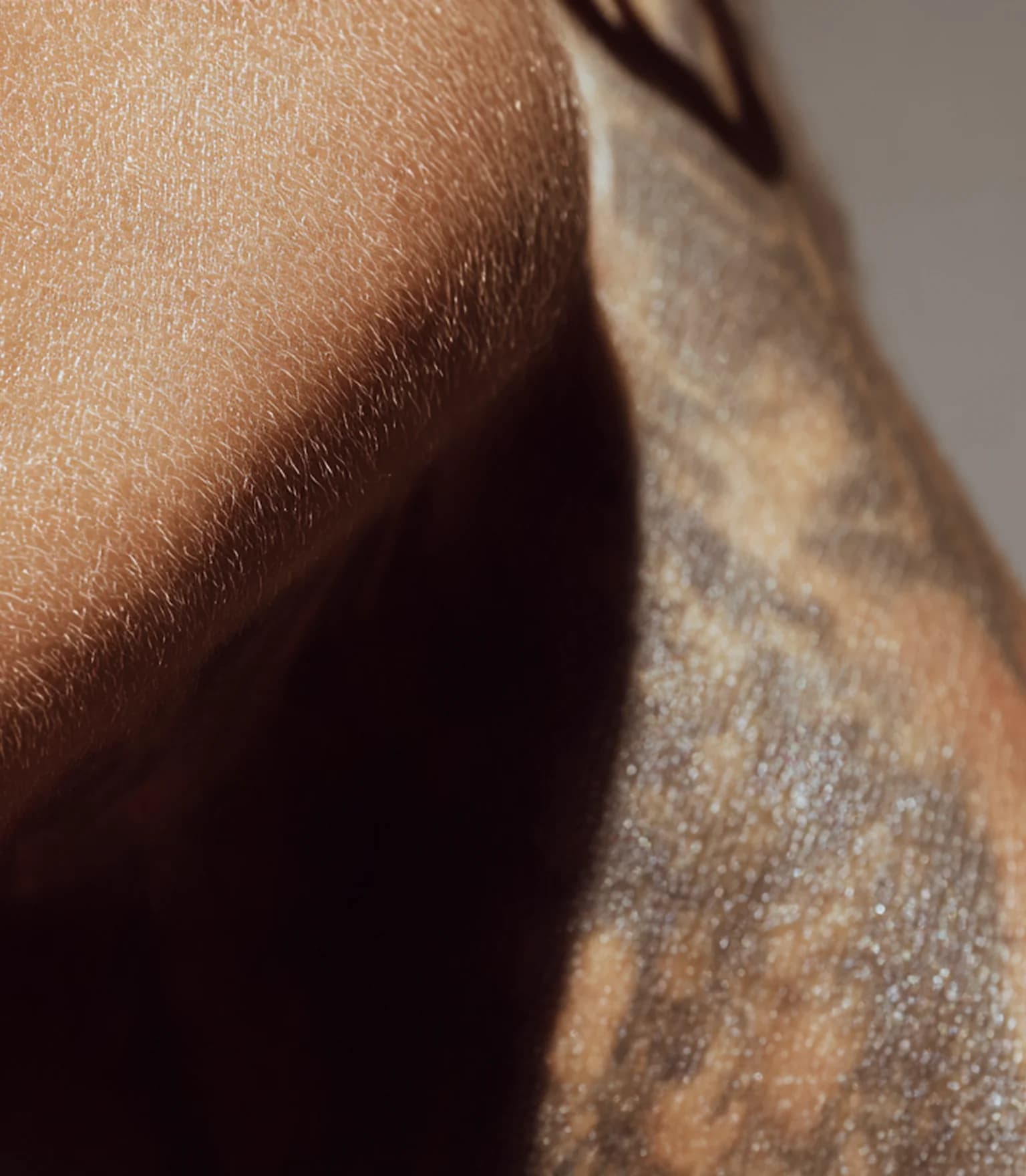
Tattoo removal uses Q-switched or picosecond lasers to break down ink particles in the skin. The laser targets the pigment without damaging surrounding tissue, fragmenting the ink into tiny particles that the body's immune system gradually eliminates. Multiple sessions are needed to progressively fade or completely remove the tattoo.
IT CAN BE USED TO:
- Completely remove unwanted tattoos
- Fade tattoos before a cover-up
- Remove professional or amateur tattoos
- Treat various ink colours (black and dark inks respond best)
- Clear skin for a fresh start
What to Expect
A qualified practitioner uses a laser that emits short pulses of high-intensity light. Different wavelengths target different ink colours. The light energy shatters ink particles, which are then processed and eliminated by the body's lymphatic system. Each session removes more ink, gradually fading the tattoo.
Treatment time
15–60 minutes depending on tattoo sizePain level
moderate to significant — described as similar to a snapping rubber band sensationDowntime
moderate; redness swelling blistering or crusting for 1–2 weeksWhen results appear
6–8 weeksFull results
multiple sessions over months to yearsLongevity
progressive fading until removal is completeLook and feel
faded or completely removed tattoo with clear skinIS IT RIGHT FOR ME?
THIS TREATMENT MAY BE SUITABLE IF:
- You have a tattoo you want removed or lightened
- You understand that complete removal takes multiple sessions (typically 6–12+)
- You're willing to commit to proper aftercare
- You have realistic expectations about fading (some colours are harder to remove)
Pre-Care & Aftercare
BEFORE YOUR APPOINTMENT
- Avoid sun exposure and tanning on the tattoo for at least 4 weeks
- Arrive with clean skin free of lotions or oils
- Shave the area if needed
- Expect some discomfort — topical numbing may be offered
AFTER YOUR APPOINTMENT
- Apply ice or cool compress to reduce swelling
- Keep the area clean and apply recommended ointment
- Blistering crusting or scabbing is normal — do not pick
- Avoid sun exposure and cover the area when outdoors
- Skip exercise saunas or swimming for 48 hours
- Sessions are spaced 6–12 weeks apart to allow the body to clear ink and skin to heal
top clinics to get Tattoo Removal in your area








Not sure if Tattoo Removal are right for you?
Answer a few quick questions to discover treatments tailored to your goals.
FAQs
Yes, tattoo removal does hurt, with most people rating laser tattoo removal pain as 6 to 8 out of 10 - often described as similar to getting the tattoo but more intense and quicker, like hot oil splatter or an elastic band snapping repeatedly against skin. However, the pain is manageable and various options exist to minimize discomfort. What tattoo removal pain feels like includes sharp snapping sensation with each laser pulse; feeling of heat on the skin; stinging or burning sensation; intensity varying by body location; and discomfort being brief during each pulse. Why tattoo removal is painful relates to laser energy breaking up ink particles; thermal effect on skin; nerve endings responding to laser; sensitive areas being more painful; and the concentrated nature of treatment. Pain levels by body location show ribs, feet, hands and spine being most painful (8-9/10); inner arm, neck and behind ear being very painful (7-8/10); outer arm, leg and shoulder being moderate (5-6/10); and buttocks and outer thigh being least painful (4-5/10). Factors affecting pain include tattoo size and density; individual pain tolerance; skin sensitivity; body location; and laser settings used. Pain management options include topical numbing cream applied 30-60 minutes before treatment; local anaesthetic injection for very painful areas; cooling devices during treatment (Zimmer cooler blowing cold air); taking paracetamol beforehand; and some clinics offering ProNox (inhaled pain relief). What makes pain tolerable includes each pulse lasting milliseconds; breaks between treatment areas; treatment session being relatively quick; knowing discomfort is temporary; and pain stopping immediately after treatment. Comparing to getting tattooed shows removal often being more intense; but sessions being much shorter; covering same area faster; and being over more quickly. After treatment pain shows mild tenderness for hours to days; feeling similar to sunburn; being manageable with over-the-counter pain relief; and being much less than during treatment. Pain reducing over multiple sessions relates to less ink remaining; smaller treatment area; lighter passes being used; and some people finding it easier each time. Most people find tattoo removal pain to be intense but manageable, significantly less than expected when proper pain management is used, and worth enduring for a few minutes to achieve desired result of tattoo elimination.
Most tattoos require 6 to 12 laser removal sessions for complete clearance, with the exact number depending on tattoo characteristics including size, ink colors, depth, age and your skin type. Sessions are spaced 6 to 8 weeks apart, making the complete removal process typically taking 12 to 24 months. Factors determining session number include ink colors, with black and dark blue being easiest removing in 6-8 sessions; green, red and yellow being moderate requiring 8-10 sessions; light blue, purple and fluorescent colors being difficult needing 10-12+ sessions; and multicolor tattoos requiring more sessions. Tattoo age affecting removal shows older, faded tattoos removing faster in fewer sessions; newer, vibrant tattoos needing more treatments; and age 10+ years often removing 20-30% faster. Tattoo depth and density considerations include professional tattoos being deeper requiring more sessions; amateur tattoos being shallower removing faster; dense, saturated ink needing more treatments; and light, patchy tattoos clearing quicker. Tattoo size and location show size not directly affecting session number but treatment time; location affecting ink clearance; areas with better circulation (torso) clearing faster; extremities (hands, feet) requiring more sessions; and covered areas often needing more treatments. Skin type influencing treatment demonstrates lighter skin (Fitzpatrick I-III) allowing more aggressive treatment; darker skin (IV-VI) requiring conservative settings; and skin type affecting treatment intensity not total sessions necessarily. The typical removal timeline shows sessions 1-3 with initial lightening visible; sessions 4-6 showing significant fading; sessions 7-9 achieving substantial clearance for many; sessions 10-12 addressing stubborn ink; and some tattoos requiring 12-15+ sessions. Why proper spacing matters relates to allowing immune system to clear ink fragments; skin needing recovery time; rushed treatments being less effective; 6-8 week intervals being optimal; and patience yielding better results. Treatment protocol shows starting with test spot sometimes; full treatment sessions every 6-8 weeks; assessment after each session; adjusting laser settings as needed; and final sessions addressing remaining traces. When fewer sessions are possible includes very old, faded tattoos potentially removing in 4-6 sessions; small amateur tattoos clearing faster; single-color black tattoos being easier; and favorable conditions aligning. When more sessions are needed shows very dense, saturated tattoos; resistant ink colors; covering previous tattoos; large multicolor pieces; and some tattoos requiring 15-20 sessions. Realistic expectations about sessions include understanding averages being 6-12 sessions; individual variation being significant; committing to the full process; patience being essential; and complete removal taking 1-2 years typically. Most people achieve satisfactory tattoo removal within 8-12 sessions when realistic expectations are maintained and proper treatment protocols are followed, though the journey requires significant patience and commitment to the multi-month process.
Yes, laser tattoo removal works very effectively, with modern Q-switched and picosecond lasers being able to completely or nearly completely remove most tattoos when proper treatment protocols are followed, though the degree of clearance depends on tattoo characteristics, with black ink responding best and certain colors being more challenging. How laser tattoo removal works involves Q-switched or picosecond lasers delivering ultra-short pulses of light; laser energy being absorbed by tattoo ink particles; rapid heating causing ink to fragment into smaller pieces; the body's immune system gradually removing these fragments; and progressive fading over multiple sessions. Why laser removal is effective relates to targeting ink particles selectively; breaking ink into removable sizes; body naturally eliminating fragments; proven mechanism of action; and decades of refinement improving technology. Success rates by ink color show black and dark blue achieving 95%+ clearance; red and orange clearing 80-90%; green being 70-85% successful; yellow and light blue being 60-75%; and purple and fluorescent being most challenging at 50-70%. Clinical evidence supporting effectiveness includes thousands of successful removals; peer-reviewed studies documenting clearance; before and after photographic evidence; patient satisfaction data; and FDA clearance for tattoo removal. What complete removal means demonstrates most tattoos fading to nearly invisible; 95%+ clearance being achievable for favorable tattoos; some ghost image possibly remaining; skin returning close to natural state; and excellent cosmetic outcomes. Factors affecting removal success include tattoo age with older tattoos removing better; ink quality and depth; colors present in tattoo; tattoo size and density; immune system function; skin type; and following proper protocols. Modern laser technology advantages show picosecond lasers fragmenting ink more effectively; shorter pulse duration reducing heat damage; multiple wavelengths treating different colors; and continued technological improvement. Why some tattoos are stubborn relates to resistant ink colors or formulations; very deep or dense ink; covering previous tattoos; and individual immune response variation. What laser removal cannot do includes not being instant process; some colors being very resistant; scarred skin remaining scarred; complete 100% removal not being guaranteed; and requiring multiple sessions over months. Realistic expectations about effectiveness include understanding most tattoos can be removed or dramatically faded; process taking 6-12+ sessions; requiring 12-24 months; maintenance sessions possibly needed; and committing to full protocol. Comparing to other removal methods shows laser being gold standard; much more effective than alternatives; safer than surgical or acid removal; and providing best cosmetic outcomes. Most dermatologists and tattoo removal specialists confirm that modern laser technology successfully removes the vast majority of tattoos to patient satisfaction when appropriate expectations are set, proper protocols are followed, and sufficient sessions are completed.
Laser tattoo removal itself rarely causes scarring when performed properly by qualified practitioners using appropriate settings, with scarring risk being less than 5% in most cases. However, pre-existing scars from the original tattoo or from picking/infection during removal may become more visible as the ink fades. Why proper laser removal doesn't typically scar relates to laser targeting ink particles specifically; not cutting or damaging skin structure; energy being absorbed by ink not surrounding tissue; modern lasers being very precise; and healing occurring without structural damage. The scarring risk factors include overly aggressive laser settings burning skin; treating too frequently without adequate healing time; infection from improper aftercare; picking scabs or blisters; pre-existing scarring from tattoo; and individual tendency for hypertrophic or keloid scars. Pre-existing tattoo scars becoming visible shows original tattoo process potentially causing scarring; ink hiding scars previously; fading ink revealing underlying scars; raised tattoos often having scar tissue; and these scars being from tattoo not removal. Types of scars that might occur include hyperpigmentation or hypopigmentation (color changes); texture changes from improper technique; hypertrophic scarring if prone to keloid formation; and these being rare with proper treatment. Preventing scarring during removal involves choosing experienced, qualified practitioners; using appropriate laser settings for your skin type; proper session spacing allowing complete healing; following all aftercare instructions strictly; keeping area clean and moisturized; not picking scabs or blisters; and protecting from sun exposure. Aftercare critical for scar prevention shows keeping area clean and dry; applying prescribed ointment; avoiding sun exposure; not picking at treated area; watching for signs of infection; and following all practitioner instructions. When scarring risk is higher includes darker skin types requiring conservative settings; areas prone to keloid scars; history of poor wound healing; immune system issues; and not following aftercare. Signs requiring attention show unusual scarring developing; raised or thickened areas; increasing pain or redness; signs of infection; and these requiring prompt practitioner contact. Treatment if scarring occurs includes silicone scar sheets; laser treatment for scars; steroid injections for hypertrophic scars; and various scar revision options. Skin type considerations demonstrate lighter skin having lower risk; darker skin requiring more conservative approach; and proper settings preventing complications. The reality of modern laser removal shows scarring being very uncommon; most people healing excellently; skin returning to normal appearance; and risks being minimal with proper treatment. Most people undergoing laser tattoo removal experience no scarring when treatment is performed by qualified practitioners using appropriate techniques, proper aftercare is followed, and the treated area is protected from sun, infection and trauma during the healing process.
Yes, tattoo removal works very effectively for most tattoos when using modern laser technology, with Q-switched and picosecond lasers successfully removing or dramatically fading 90%+ of tattoos when proper treatment protocols are followed and realistic expectations are maintained. The proven effectiveness of laser tattoo removal relates to decades of use and refinement; thousands of successful cases; peer-reviewed clinical studies; FDA clearance for the procedure; and being the gold standard method. What complete removal typically achieves shows most tattoos clearing to 95%+ (nearly invisible); skin returning close to natural appearance; black and dark colors removing almost completely; multicolor tattoos achieving excellent results; and high patient satisfaction rates. Realistic success rates by tattoo type include amateur tattoos often achieving 100% clearance; professional black tattoos clearing 95%+; multicolor professional tattoos fading 85-95%; resistant colors potentially leaving faint traces; and overall excellent outcomes for most. Why laser removal is effective demonstrates laser energy fragmenting ink particles; body's immune system eliminating fragments; progressive fading over sessions; proven biological mechanism; and continual technological improvement. Factors determining how well removal works include tattoo colors present (black being easiest); tattoo age (older fading better); ink depth and density; your immune system function; skin type and treatment settings; and number of sessions completed. What can be successfully removed shows professional tattoos of all types; amateur or homemade tattoos removing faster; single-color tattoos being easiest; multicolor being very achievable; and most tattoos achieving satisfactory results. Challenging tattoos include very dense multicolor pieces; resistant colors like yellow and fluorescent; covering previous tattoos; tattoos on hands and feet; and these requiring more sessions. Technology making removal work includes Q-switched lasers being proven effective; picosecond lasers offering superior ink fragmentation; multiple wavelengths treating different colors; and proper technique optimizing results. The removal process demonstrating effectiveness shows visible fading after first sessions; progressive lightening over course; most ink being eliminated; remaining traces being minimal; and dramatic transformation. Treatment protocol ensuring success involves appropriate session spacing; proper laser settings for skin type; completing recommended number of sessions; following aftercare instructions; and not expecting instant results. What removal cannot do includes not being instant one-session process; some colors being very stubborn; requiring months to years; not always achieving 100% perfection; and maintenance possibly being needed. Evidence supporting effectiveness includes clinical studies showing high clearance rates; before and after photographic documentation; patient satisfaction surveys; dermatologist endorsement; and proven track record. When removal might not work as well relates to certain ink formulations being resistant; immune system issues; improper treatment protocols; insufficient sessions; and rare individual non-response. Most tattoo removal specialists report that 90%+ of tattoos can be successfully removed or faded to near-invisibility using modern laser technology, with patient satisfaction being very high when realistic expectations about the process timeline and degree of clearance are maintained from the start.
Laser tattoo removal works by delivering ultra-short pulses of highly concentrated light energy that is selectively absorbed by tattoo ink particles, causing them to heat rapidly and fragment into tiny pieces small enough for the body's immune system to gradually remove, resulting in progressive fading over multiple treatment sessions. The scientific mechanism shows Q-switched or picosecond lasers emitting specific wavelengths of light; ink particles absorbing laser energy; rapid heating causing photomechanical effect; ink fragmenting into smaller particles; immune cells (macrophages) engulfing fragments; lymphatic system removing debris; and progressive clearing over weeks. Why specific wavelengths matter demonstrates different colors absorbing different wavelengths; 1064nm targeting black and dark blue; 532nm treating red, orange and yellow; 694nm removing green and blue; and multiple wavelengths being needed for multicolor tattoos. The pulse duration importance shows Q-switched lasers using nanosecond pulses; picosecond lasers using even shorter picosecond pulses; shorter pulses creating photoacoustic effect; fragmenting ink more effectively; and reducing heat damage to surrounding tissue. What happens during treatment includes laser handpiece being pressed against skin; rapid pulses delivered to tattoo; each pulse lasting nanoseconds; sensation of rubber band snaps; and treatment covering tattoo area. How ink is eliminated from the body shows fragmented ink being too small to remain trapped; macrophages ingesting particles; lymphatic vessels collecting debris; eventual excretion through lymphatic system and liver; and process continuing for weeks after treatment. Why multiple sessions are needed relates to not all ink being accessible in one session; some ink being deeper requiring multiple passes; immune system needing time to clear fragments; gradual removal being safer; and progressive clearance being more effective. The wavelength selection process shows practitioners assessing ink colors; choosing appropriate laser(s); some clinics having multiple lasers; treating different colors in separate sessions; and proper wavelength being crucial. Session spacing rationale demonstrates 6-8 weeks allowing immune clearance; skin needing time to heal; rushed treatments being less effective; and patience yielding better results. Technology comparison shows Q-switched lasers being proven standard; picosecond lasers offering superior performance; both being FDA cleared; newer technology improving results; and proper technique mattering as much as device. Safety mechanisms include laser selectively targeting ink; surrounding tissue largely unaffected; controlled energy delivery; cooling systems protecting skin; and experienced practitioners optimizing settings. What makes laser removal superior to alternatives demonstrates precise ink targeting; no cutting or scarring; body naturally clearing ink; gradual safe process; and excellent cosmetic outcomes. Understanding how laser tattoo removal works helps set realistic expectations about the multi-session process, explains why proper spacing is necessary, and clarifies why certain colors are more challenging to remove than others.
Before tattoo removal treatment, people typically have unwanted tattoos causing regret; tattoos limiting clothing choices or career options; poor-quality or faded tattoos; tattoos from past relationships or life phases; covering tattoos with clothing or makeup; changed aesthetic preferences; desire for clean slate; embarrassment or self-consciousness; and decision to pursue professional removal for better life options. After laser tattoo removal treatment, following completion of recommended session series (typically 6 to 12 treatments spaced 6 to 8 weeks apart) and allowing adequate time for final fading and immune system clearance (usually assessed 8 to 12 weeks after final session), most appropriate candidates experience dramatic, life-changing transformation. Common results from complete tattoo removal course include 95%+ clearance of black and dark tattoos; 85-95% fading of multicolor tattoos; skin returning very close to natural, pre-tattoo state; barely visible or completely invisible tattoo traces; smooth, clear skin; freedom from covering or concealing; confidence wearing any clothing; and elimination of tattoo-related stress. The fading progression shows sessions 1-3 with initial 20-30% lightening visible; sessions 4-6 showing 50-60% clearance; sessions 7-9 achieving 70-85% fading; sessions 10-12 addressing remaining stubborn ink; and final assessment showing dramatic transformation. Physical transformation by tattoo type demonstrates black tattoos often achieving complete invisibility; red and orange fading to 90-95%; multicolor professional tattoos clearing 85-95%; amateur tattoos often removing completely; and excellent cosmetic outcomes. The psychological and emotional impact shows profound relief from tattoo regret; enhanced self-confidence and self-esteem; freedom from judgment or questions; no longer hiding or covering tattoos; feeling authentic and comfortable; improved career or relationship opportunities; and life-changing positive effects. The removal journey timeline demonstrates initial consultation and assessment; beginning treatment series every 6-8 weeks; visible progressive fading; patience through months-long process; final sessions addressing traces; and ultimate clearance at 12-24 months from start. The degree of final clearance depends on tattoo characteristics including ink colors, depth and age; skin type and immune function; number of sessions completed; laser technology and practitioner expertise; following aftercare protocols; and realistic expectations. Typical measurable outcomes show black tattoos achieving 95-100% clearance; professional multicolor tattoos fading 85-95%; amateur tattoos often removing completely; most tattoos becoming nearly or completely invisible; and very high satisfaction rates. Before and after expectations should be realistic: most tattoos can be removed to near-invisibility; process requires 6-12+ sessions over 12-24 months; some colors may leave faint traces; small ghost image may remain in some cases; scarring being rare with proper treatment; patience and commitment being essential; and results being worth the investment. Factors affecting final appearance include completing full recommended treatment course; proper session spacing allowing immune clearance; protecting treated area from sun throughout process; following all aftercare instructions; managing expectations appropriately; and individual biological response. Most satisfied tattoo removal patients report treatment being life-changing; dramatic improvement exceeding expectations; freedom and confidence from clear skin; wishing they had pursued removal sooner; process being worth the time and investment; and feeling able to move forward without past tattoo decisions affecting present life. To achieve dramatic clearance of your unwanted tattoo, book a consultation on MARBL with a qualified laser tattoo removal specialist who can assess your specific tattoo, explain realistic expectations for your ink colors and characteristics, recommend the appropriate laser technology and treatment protocol, and guide you through the transformative journey from tattooed to clear, confident skin.